


What's a Chinese City actually like?
... on the ground, in the streets, not from a drone?

I know this isn’t your regularly scheduled content, and I guarantee that the next post will be food and recipe related, as promised.
But with this post, I just wanted to try to clear the air1 on an incredibly basic question:
What’s a Chinese city actually like?
For many years on end now, a certain sub-genre’s existed out there on the internet which I sometimes call ‘Chinamancer content’. You’ve probably seen the pictures — nighttime drone shot, neon-drenched skyline, saturation dialed up to 11 — very obviously evoking a sort of cyberpunk aesthetic. Chinamancer content, of course, exists side by side with ChinaTrek content — daytime drone shot, glossy central business district, saturation dialed up to 11:


Now, I don’t mean to be too dour. People can and should have fun with this stuff. But what China-related media and Science Fiction do have in common is that they both tend to be reflections of the anxieties of the present. To Americans at least, much of the point of the above pictures isn’t to present China as a real, tangible place… but rather to highlight a perceived stagnation in the United States.
And yet, just like how 2015 in Back to the Future didn’t end up being what 2015 was like in real life, and Chinese cities are not the science fiction utopia — or dystopia, depending on your politics — that they’re sometimes presented to be online.
Let’s take that aerial of Guangzhou (bottom right).
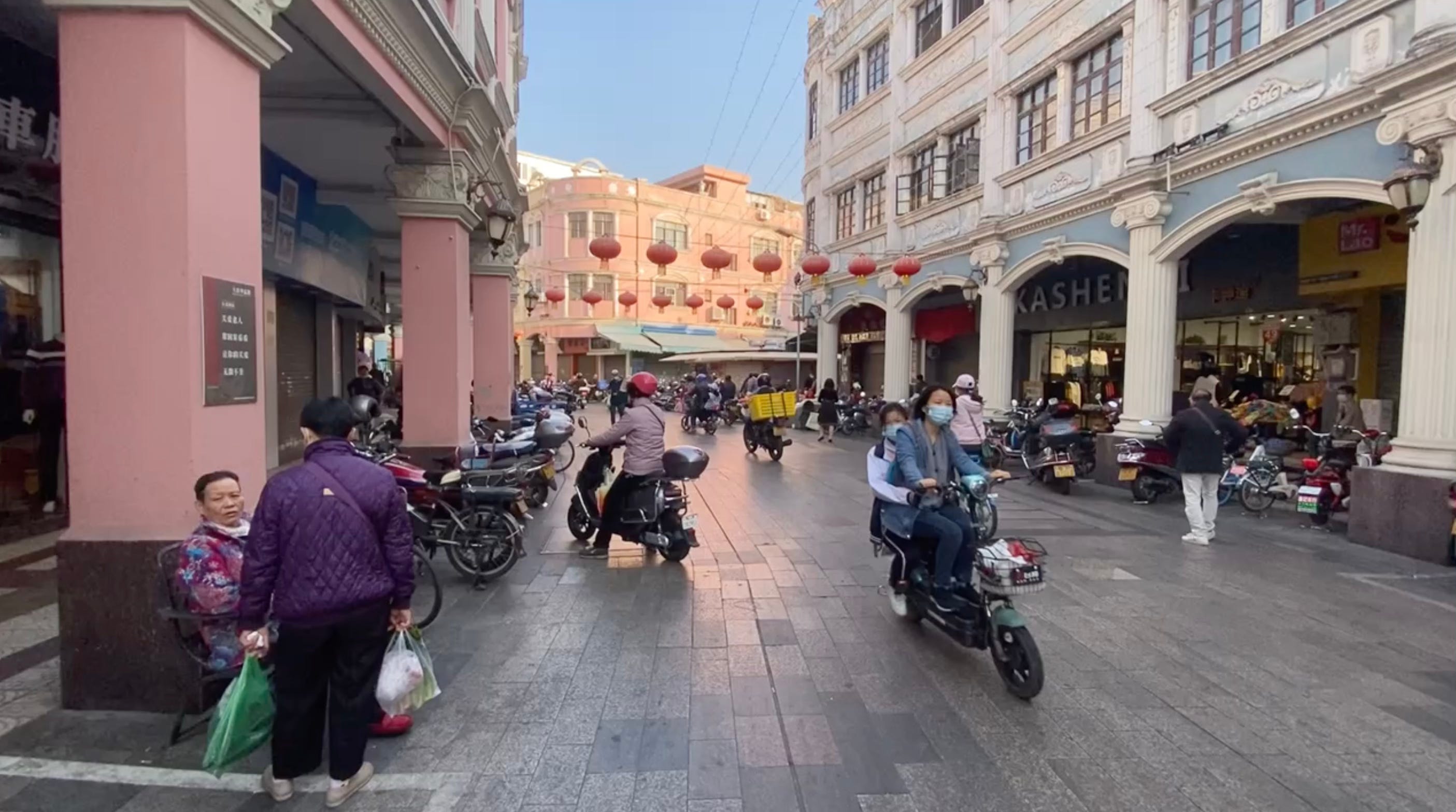
You probably don’t usually commute by DJI quadcopter, so let’s land and see what the street level looks like there:


Oh.
Sort of has the feel of an… office park? Good or bad, it doesn’t exactly tickle the brain as “awesome Sci-Fi city”.
The Chinese City from the Ground
Now, I want to be clear here: I like Chinese cities. Because there’s much, much more to these cities than the glossy central business districts these heavily-edited aerials tend to portray. When it comes to walkability and street life, it’s there — just not in the districts that people in the west tend to spread online.
When it comes to urban form, in my personal opinion, Chinese cities compare favorably to Southeast Asia, India, and post-automobile North America (Phoenix, Dallas, etc); less favorably to Europe and pre-automobile North America (New York, Boston, etc). Let’s call it… “consistently B+ to C+” on a properly global scale.
The cool thing, however, is the sheer scale of the thing: I could count the truly walkable cities in America on one hand (or two, if we’re being generous). In China, there are a myriad of cities you’ve likely never heard of with a walkable urban core:


Of course, these pictures are definitely painting a much more pleasant portrait than when we ‘landed our drone’ in Guangzhou. So what’s going on?
The Difference between Chinese and North American Metro Areas
I want you to imagine driving into an American city. I’ll use my hometown of Philadelphia as an example, but most cities that follow the North American development model would give you a similar experience.
A couple hours outside of Philadelphia, it’s squarely rural: forest and farmland, interspersed with a sprinkle of suburban style subdivisions. Drive due east, and you get into the exurbs. The McMansions start to come fast and furious, pickup truck beds begin to get suspiciously clean, corn farms begin to give way to horse farms, Magastan starts to gives way to deep blue ‘In this house, we believe…’ signs. Continue driving east and you’ll get to the middle class suburbs — areas much like the exurbs, albeit with houses a bit older and smaller, with slightly smaller yards and somewhat less illustrious public schools.
Continue driving still and you’ll get to the inner ring: old street car suburbs that seem to either be ‘completely fucking loaded’ or ‘one of the most dangerous places on the planet’ depending on the historical luck of the draw. And as you drive into the city proper… streets become more narrow, traffic becomes more difficult to navigate, and the sidewalks become livelier. You park your car (spending a small fortune on parking) and continue on foot, until you arrive at The Downtown. A historical core with old buildings, tight and walkable streets, and gleaming skyscrapers that cast shadows over it all.
But this whole drive from the countryside into the city? It’d be completely, radically different in China.
Indeed, I’ve found that it’s actually a pretty common experience for people new to the country: you hop in a taxi from the airport, go to your destination (a place theoretically ‘Downtown’), get out of the car, look around and say: “wait, this is it?”. The roads are wide, there’s cars everywhere — just like the above pictures of Guangzhou, it feels like you’re on… the outskirts.


The reason lies in the very different development model taken by Chinese cities. Chinese cities don’t have those concentric rings of (1) exurb (2) outer suburb (3) inner suburb (4) city (5) downtown. Instead, all of that development ended up happening within the city itself.
It’s a little hard to explain, but at the very least, remove those five ‘rings’ from your mental model of a metropolitan area. Replace them, instead, with these five ‘sections’.
The Five Sections of a Chinese City
(1) The Old Town


The historical core. If you looked at a historical map of a Chinese city a century back, this section would have been the city. Like most pre-automobile cities the world over, these areas were tightly packed, walkable, and connected by a lattice of narrow streets and alleys.
Over in Europe, of course, being the wealthiest swath of the world for more than a hot second… they had the financial resources to (1) build their historical structures to last, followed by (2) preserving said core in amber. Chinese old towns unfortunately weren’t blessed with the same advantages.
In China, many of these structures were either made of wood and/or had poor upkeep. So as the years progressed, the neighborhoods would get shabbier and shabbier… and people with a bit of cash would find the opportunity to move elsewhere (more on that in a second), creating a sort of vicious circle. After all, why live in the crowded, dirty part of town in a small flat if you’ve got better options?
So over the years, one of three things tended to happen to these old towns:
Decline (or at least, relative). Some old towns still exist in their original form, with little or no renovation. Depending on the city, they could still be awesome, lived in places (e.g. Guangzhou) or living ruins overtaken by cats (e.g. Shantou). Most exist somewhere between these extremes. But even in a city with a very cool old section like Guangzhou, it’s undeniable that the economic center of gravity of the city has moved elsewhere.


Left, Guangzhou's Vibrant Old Town (小红书@刘滨滨); Middle, Zhenjiang's Old Town; Right, Shantou Old Town Renovation. Old town renovation projects can vary in the totality of the project. Some old towns, like Datong, complete demolished the old town, moved the original inhabitants, and rebuilt a 1-to-1 replica. Other old towns haven’t done much besides swap up a couple facades (for the sake of good-looking). Most renovation projects exist between these two extremes. Generally speaking, the more ambitious the renovation project, the more the area becomes a sort of ‘open air mall’ (with varying degrees of touristy-ness); the less ambitious, the more it unfortunately tends to fit into the first category.

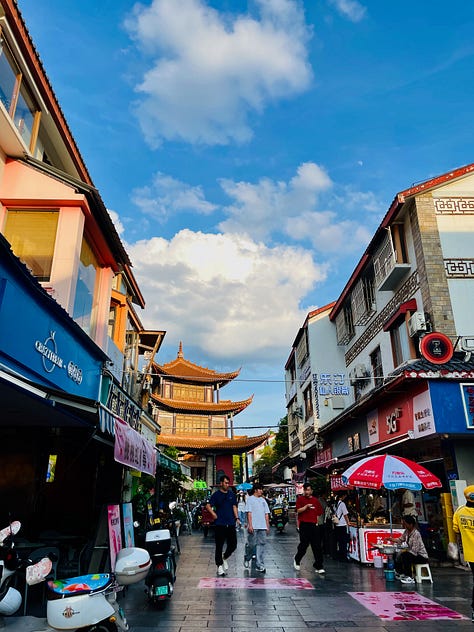

Left, Datong's 'completely renovated' old town (Substack@Sinocities); Middle, Yuxi's Pedestrianized and Renovated old town; Right, Toishan's old town Whole scale redevelopment. Some cities – especially in the 90s and 00s – sought to rebuild their cities as gleaming, modern, metropolises. And to execute that vision, they embarked on large-scale projects that would make Robert Moses blush: bulldoze everything, layer on highways, layer on highrises. Become the ‘modern city’ of the imagination.


Which brings us to…
(2) The New Town
That street level view of Guangzhou? Yeah, that’s the new town.
Some cities completely bulldozed their historical core to make their new town, but that usually wasn’t the development pattern — if solely just for economic reasons (farmland tends to be cheaper to buy out than urban neighborhoods). So a little like La Défense in Paris, the site of these new towns was usually one or two districts over from the historical core.
Sometimes they’re more commercial, sometimes more residential. But either way, if you’re someone like me that like cities… let’s call a spade a spade:


These are not our jam.
I try to steer travelers away from New Towns when I can. After all, they’re often like… a two dimensional Dubai. LeCorbusier for the 21st century — towers in parks and parking lots. Probably not what you’re looking for on a cultural vacation.
And yet — if you’ll indulge me — I also want to try to try to steelman the New Town a little bit. Because to me at least, the correct American comparable for Chinese New Towns shouldn’t be ‘The Downtown’ but rather ‘The Suburbs’. After all, these are newer ‘rings’ of development.
And against the suburbs, pros and cons of this model start to move into clearer focus. Cons, as compared to North American suburbs:
You don’t get a big house with a fluffy lawn.
It’s usually a bit easier to get to proper wilderness in North America.
Waiting for elevators sucks, it’s like the pedestrian equivalent of being stuck in traffic.2
Besides that, there’s an immeasurable number of pros. This is not Hong Kong or Tokyo where normal people have to squeeze: a flat in a new town is often between 90 to 130 square meters (950 to 1400 sqft) – that’s like, approaching townhouse/inner suburb sizes. Further, while those roads aren’t necessarily our aesthetic urban ideal, they’re ‘walkable’ in the most literal sense of the word: you can use your feet as locomotion to get from one place to the next. They have sidewalks, they have bike lanes/e-bike lanes, they have some greenery, they have 1st floor commercial areas. It is entirely possible to live in a Chinese new town without a car!


Further, density has some side benefits. Amazon and UberEats are quite expensive in the United States, because the price has to compensate for that “private taxi for your burrito”. It’s a lot cheaper when delivery people are zipping around on e-bikes, delivering to your apartment complex rather than to your individual house.
Would I personally want to live in a Chinese new town? I mean… no. Not my scene. Copy/paste streets, geography of nowhere, suburbs in a tower. But I would find it infinitely more livable than an American exurb, personally3. But different strokes and all that.
(3) The ‘Medium’ Town (“Commie Block” Neighborhoods)


Let me say upfront first that “the medium town” is decidedly not a real term. In mine and Steph’s travels throughout China, over the years just… we ended up referring to the old ‘commie block’ neighborhoods in that way.
They’re definitely not New Town, but they’re not quite ‘Old Town’ either. They consist of 4-8 story walk-ups that were the first ‘phase’ of new development from the 70s to the 90s. Internationally, they tend to get a bad rap because, I mean… look at them:
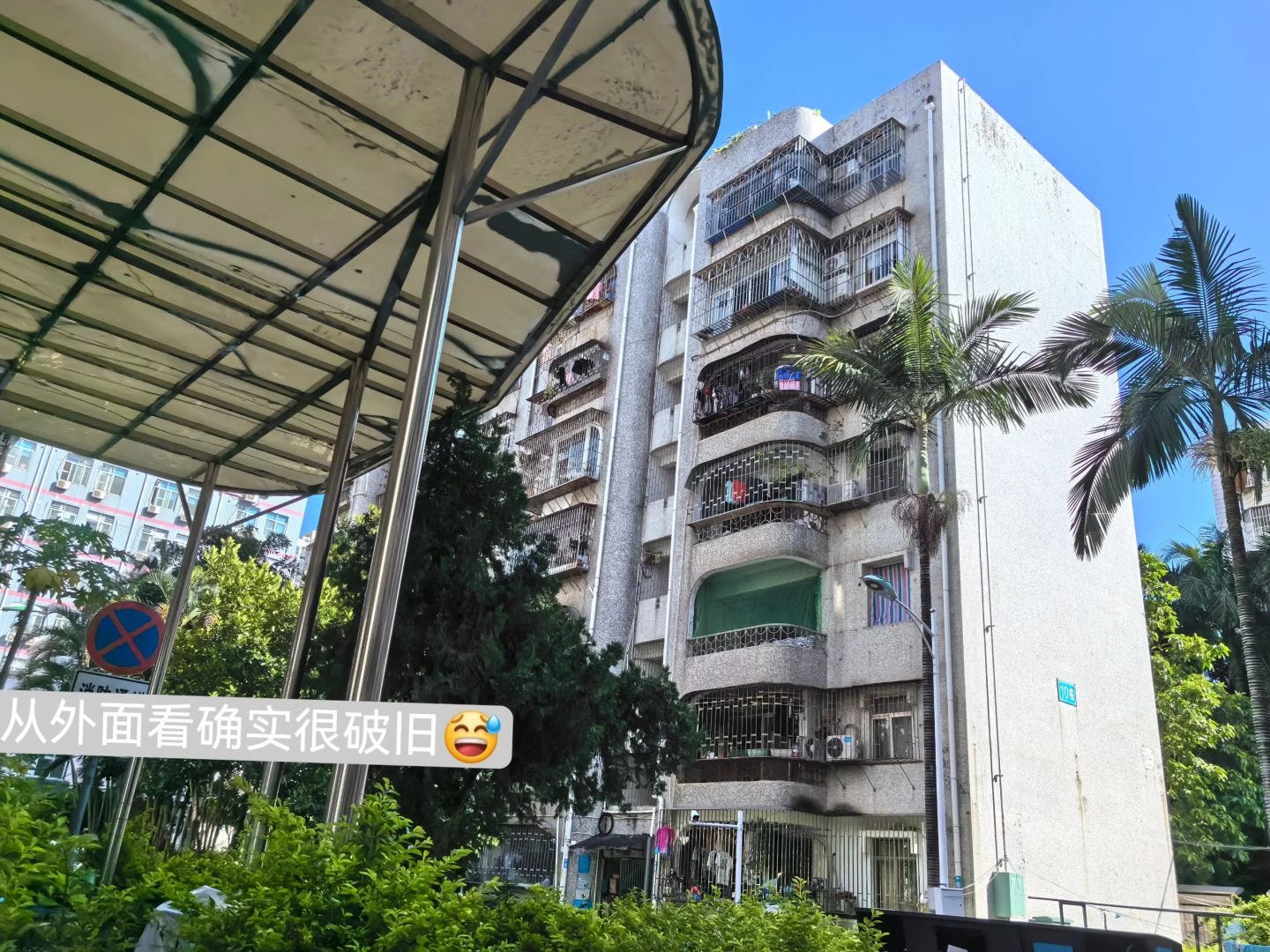
Certainly not going to be featured in Architectural Digest anytime soon. But when it comes to the vibe of the street, these neighborhoods tend to be the best of both worlds. There’s narrow-ish lanes, good sidewalks, trees, and commercial activity… but within the blocks themselves they’re much more quiet and livable than the old town. This is where the middle class tends to live and where older generations often settled.
This here? This is my scene.


When it comes to livability… I’ve lived in these flats before. They’re solid — you can definitely make them nice enough. They tend to be a little darker than the new developments (more on that at the end, where I’ll talk about how these neighborhoods overlap).


Also – importantly, for this Substack — the best food tends to be found in these areas. When traveling, commie blocks are a solid sign for a good meal.
(4) The Urban Village


There’s a certain historical oddity in how the Chinese New Towns were constructed — because they bought up farmland, often the land of the village that it surrounded… remained.
The villagers then found themselves in an economically advantageous situation. Because while the New Town that was built on its flanks tended to be geared for middle to upper income individuals, they could expand and rent out the structures in the old village to service the working class.
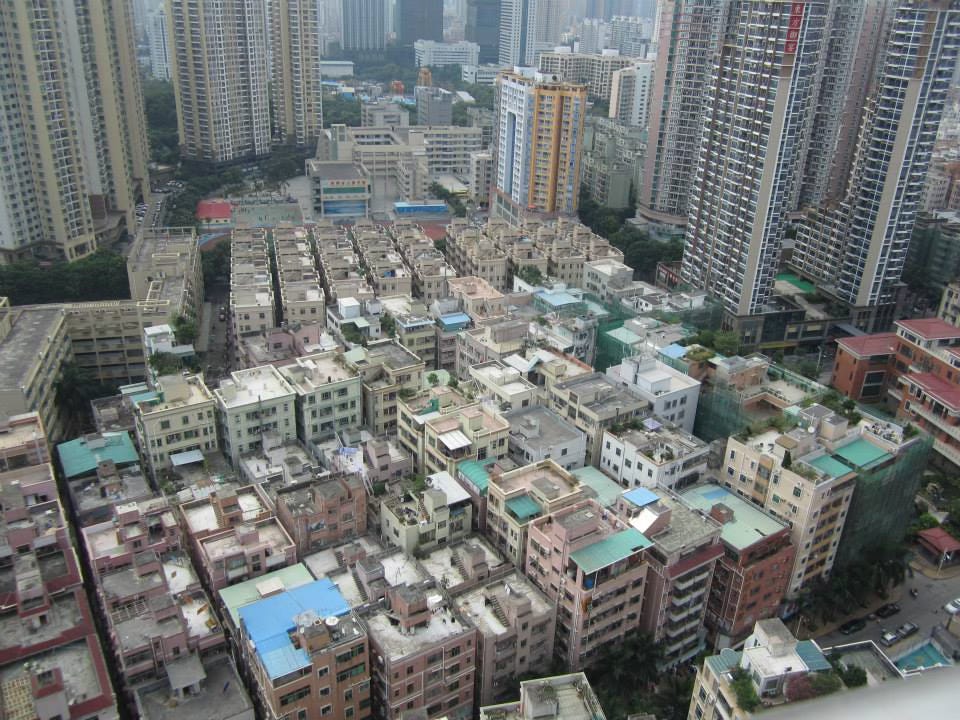
The end result are these haphazard, favela-like neighborhoods. But unlike favelas, they’re quite safe, and can be rather fun areas to walk around and explore. There’s tons of street life, and the structures themselves (being newer), tend to compare favorably to the old town.
At their best, an urban village can be an oasis of energy, culture, and walkability in an otherwise ‘meh’ new town. But the pleasantness of the place will usually depend a lot on local management. For example, an urban village like Shuiwei in Shenzhen has had pretty active governance for many years now, and has become one of the trendier neighborhoods in the city.
Other urban villages do the bare minimum, happy to collect their rental cheques (and crossing their fingers that a developer will buy them out). These villages can still be decent walks, but will undeniably be shabbier/dirtier.
(5) The Highrise Exurb
The final neighborhood type is the only one what I would avoid at all costs (unless you happen to have a car, or at least an e-bike).
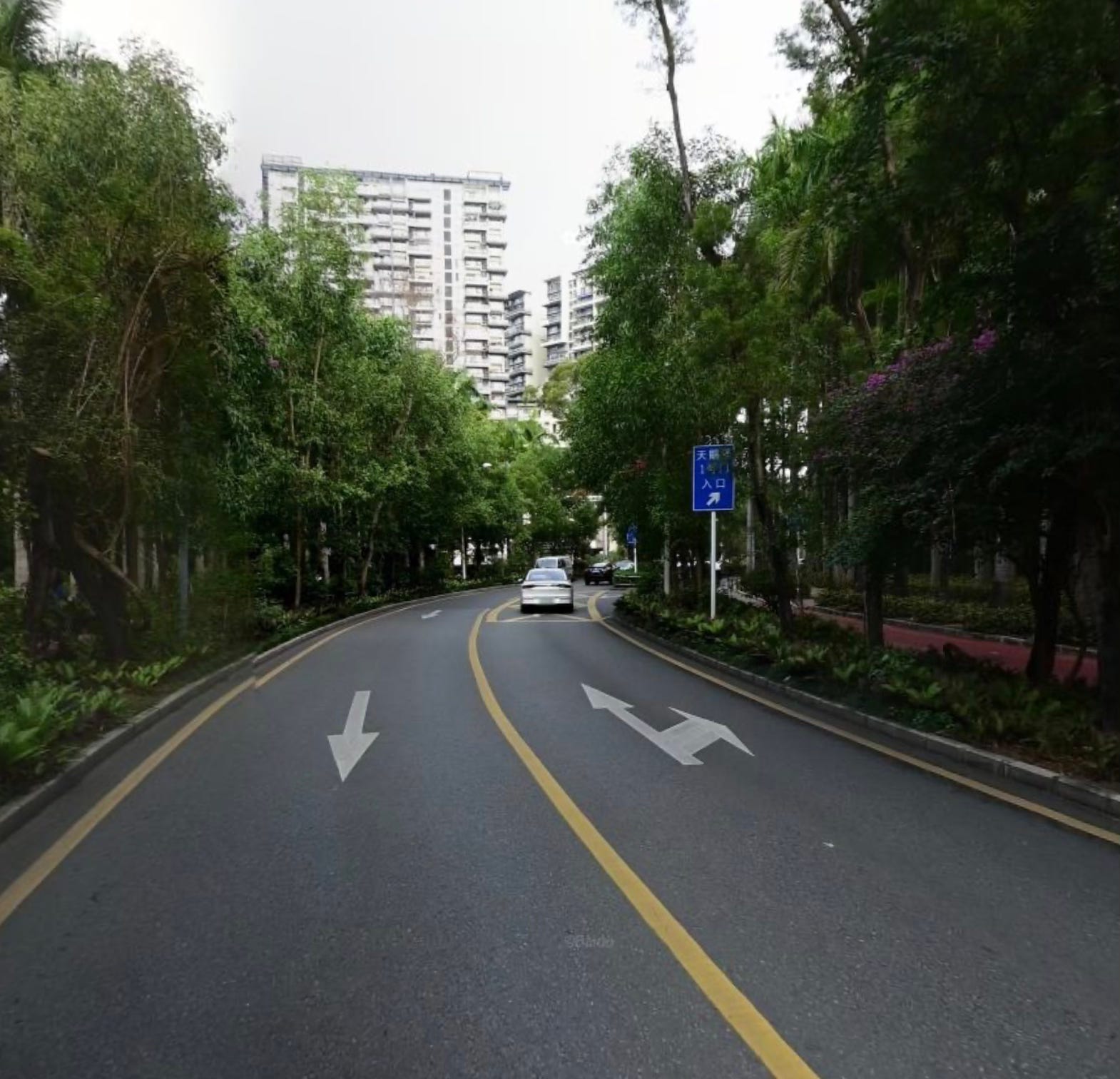
There are some development projects that exist on the outskirts of the city that very much have the form of a ‘new town’, but are often rather massive complexes — complexes that can be difficult to navigate without automotive transport. Like, I had one friend in Shenzhen that was living in a place in the Longgang district where it took 20 minutes to walk from their apartment to the front gate of their complex (where you’re then greeted by a highway)4.
Again, in fairness these areas would likely be more survivable without a car than an American style exurb. But at this point, those pros of ‘big house and the fluffy lawn’ begin to flex a small comparative advantage…
Suggestions for Traveling and Living
Of course, like all things, the lines in between these categories can get quite blurry. In particular, there’s a reasonable quantity of newer development that tends to be sprinkled among the old town and the ‘medium’ town neighborhoods.
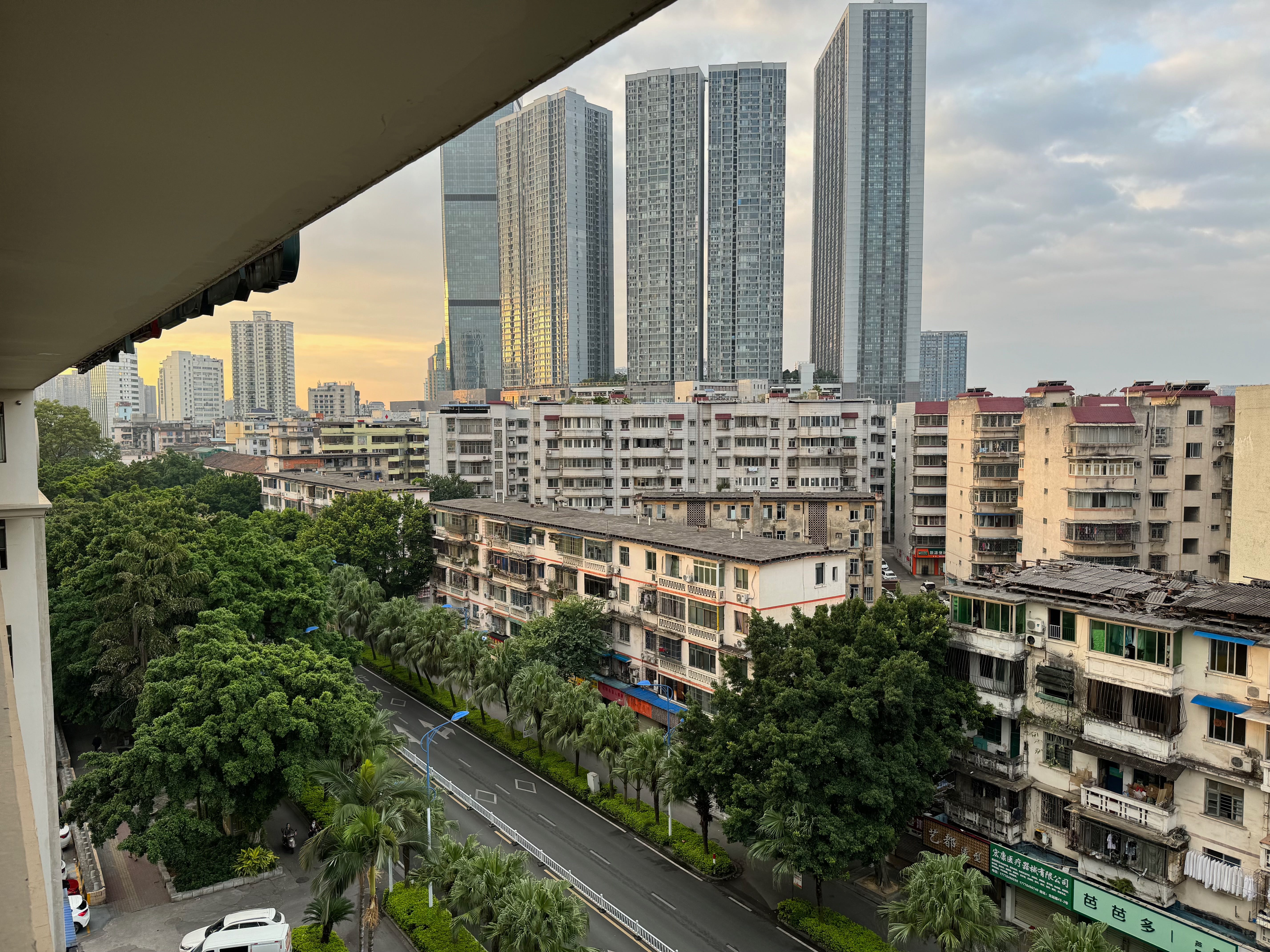
For travelers, I suggest trying to find a hotel in either an old town or a ‘medium’ town. Often the latter can be a better choice, but it can sometimes be a bit difficult to parse exactly where said ‘medium’ town is without getting your feet on the ground first. The satellite and Baidu street view can only tell you so much.
Note that fancy western hotel chains often tend to be located within the new town. A local Chinese hotel chain, ‘Jinjiang’, is our usual go-to and tends to have hotels in a diversity of neighborhoods. Because it can sometimes be difficult to tell where exactly is most interesting to be located, a decent idea if you’re staying in one city for a while is to only book two nights at first. This way you can easily change hotels if you find a neighborhood you prefer.
For living, as I said before, I find those older ‘commie blocks’ livable enough and would totally live in one again in a pinch. However, for me at least, the best of all worlds is to find a newer development that’s flanking a ‘medium’ town, an old town, or an urban village. This way you can get a little more light and space, while having all the benefit of being in a walkable neighborhood.
The impetus for this post was the recent wave of people from TikTok on Xiaohongshu (the “Chinese Instagram”). This has seemed to have ripple effects on Reddit, where I’ve seen people posting aerials of Chinese cities and talking about how ‘advanced’ and ‘sci-fi’ they are. In response, I’ve seen a number of people slagging Chinese cities for this or that. We wanted to try to show you the reality — how street level looks through our own eyes.
Tip: do not be seduced by pretty views, always try to live on a single-digit floor in a highrise. As the months wear on, the gorgeous view turns into nothing but a static background image — but convenience lasts. The only exception to this tip is if you’re living in a first tier city with lots of apartment turnover, and manage to nab the very top floor — this cuts your risk of your next door neighbors renovating (a constant risk in Chinese cities, but particularly the first tier) in half.
To me, doing yardwork on weekends to satiate a little emperor in an HOA sounds less like a circle of a metropolitan area and more like a circle out of Dante.
Perhaps predictably, these are often the haunches of the wealthy. The world over, the neighborhoods of the elite tend to rhyme in the most predictably boring ways.
This is pretty good in accurately describing most cities. When you get inland and further away from the dream coast, many cities went from literal rammed earth farm houses , to malls and high rises. Folks WANT to live in those towers on a high floor because their childhood was spent in a mud shack or a 2 room concrete box. Modern development with a wall around it with a high floor unit is high status. As an example, in Enshi it's considered desirable to be close to the airport because that's where the brand new stuff is. You can drive for about 10 minutes, be on the edge of beautiful mountain scenery, and you'll be derided and laughed at for wanting to live out with the peasants.
everything you write is so goddamn good man